In short: A "septic assessment" typically answers which system, and how big? A Land Capability Assessment answers the bigger question first — can this land safely treat and disperse wastewater at all? — and then recommends the system. On unsewered land in NSW and Victoria, councils almost always want the LCA, which usually covers both.
The short answer
If a builder, plumber or planner has told you that your block needs a "septic report" before you can build, it is worth knowing exactly what is being asked for — because the wrong report can send you back to the start. In everyday conversation, people use septic assessment, on-site wastewater assessment and Land Capability Assessment (LCA) as if they were the same document. They overlap, but they are not identical.
The simplest way to hold the difference in your head: a septic assessment tends to be about the system — choosing and sizing a septic tank or aerated wastewater treatment system (AWTS). A Land Capability Assessment is about the land — whether the soil, slope, groundwater and available area can sustainably accept effluent for decades — and then, on that evidence, it recommends the system. In practice, across councils in Albury, Wodonga, Wangaratta and beyond, the LCA is the document that satisfies the approval, and it generally absorbs the septic-sizing work inside it.
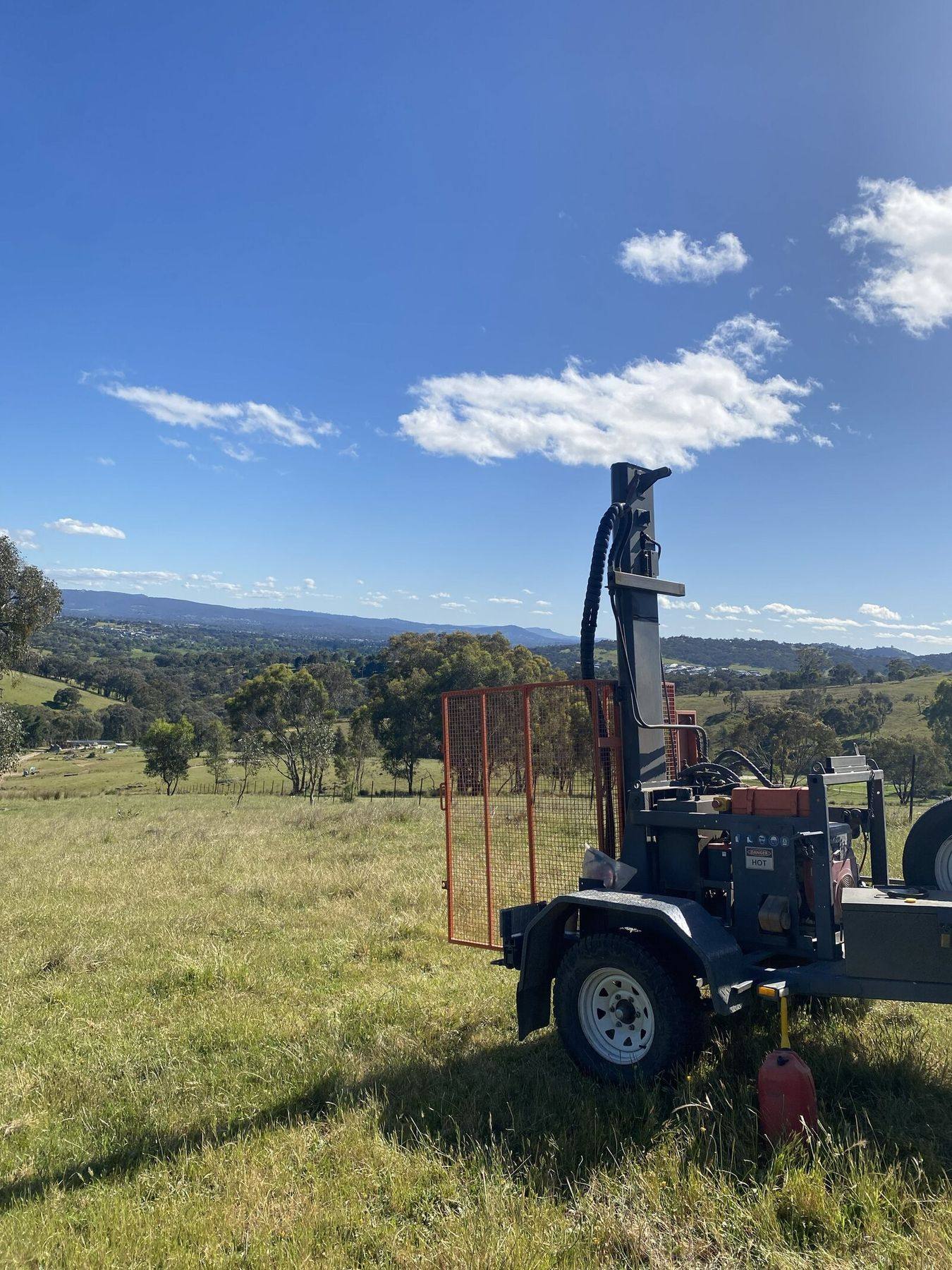
What a septic / on-site wastewater assessment covers
A septic or on-site wastewater assessment, in its narrowest form, is concerned with the treatment and dispersal hardware. It typically sets out to answer a focused set of questions:
- What type of system suits the household? A conventional septic tank with a subsurface disposal field, or a higher-treatment AWTS producing effluent suitable for subsurface or drip irrigation.
- How big does the system need to be? Based on the design wastewater load — usually driven by the number of bedrooms or occupants and daily flow allowances.
- How will effluent be dispersed? Trenches, beds or pressure-compensating subsurface drip, and roughly how much land application area that requires.
On its own, a bare septic sizing exercise leans heavily on assumptions about the ground — it often treats the soil and site as a given rather than investigating them. That is fine for a rough concept, but it is rarely enough for a council decision, because it does not prove the land can cope. The moment a council wants evidence about the soil, groundwater and site constraints, the work becomes a Land Capability Assessment.
What a Land Capability Assessment covers — the land's capability
A Land Capability Assessment starts a step earlier and reaches a step wider. Before recommending any system, it investigates whether the land itself is capable of treating and dispersing wastewater sustainably, in all seasons, without harming public health, waterways, groundwater or neighbours. Prepared to AS/NZS 1547:2012 On-site domestic wastewater management, an LCA brings together:
- Soil assessment — test pits or boreholes logged by horizon, soil texture and structure, the AS/NZS 1547 soil category, permeability, dispersion and depth to limiting layers.
- Site assessment — slope, landform, drainage lines, flooding, available area and the physical constraints that shape where effluent can go.
- Groundwater — depth to the seasonal high watertable and the separation needed to treat effluent before it reaches it.
- Buffer distances — setbacks to boundaries, dwellings, dams, bores and watercourses.
- Water and nutrient balance — modelling that sizes the land application area for the design load, in the local climate.
Only after all of that does the LCA make its recommendation: the system type, the dispersal method, the size and location of the land application area, and any management conditions. In other words, the septic recommendation is the last section of an LCA, not the whole of it. For the full anatomy, see our explainer on what a Land Capability Assessment is.
Choosing a system before assessing the land is like ordering the furniture before measuring the room. On a tight or constrained block near Yarrawonga, Corowa or Holbrook, the land capability finding often dictates which system is viable — not the other way around.
Where the two overlap
The overlap is real, which is why the terms get muddled. Both are ultimately about managing household sewage on an unsewered block, and both end with a recommended system and a land application area. A thorough on-site wastewater assessment that actually investigates the soil and site is, in substance, doing the work of an LCA — and a Land Capability Assessment always contains the system selection and sizing that a septic assessment would provide.
The practical upshot for landholders around Thurgoona, Howlong, Mulwala and Benalla is reassuring: you rarely need both as separate reports. A properly prepared LCA is your septic assessment, with the added land investigation that councils require. Commissioning one comprehensive report avoids paying twice and avoids the gaps that appear when a sizing note and a soil report are written by different people who never spoke to each other.
| Aspect | Septic / on-site wastewater assessment | Land Capability Assessment (LCA) |
|---|---|---|
| Core question | Which system, and how big? | Can this land sustainably treat & disperse effluent — then which system? |
| Soil investigation | Often assumed or limited | Test pits/boreholes, soil category & permeability |
| Site & groundwater | Not always assessed | Slope, flooding, buffers, seasonal watertable |
| Water & nutrient balance | Basic sizing | Full modelling to size land application area |
| Standard | AS/NZS 1547:2012 — On-site domestic wastewater management | |
| Accepted by councils for a DA/permit | Rarely on its own | Yes — the report councils expect |
Which one does your council want?
For a new dwelling, a subdivision, or a new or upgraded on-site wastewater system on unsewered land, councils across the region overwhelmingly ask for a full Land Capability Assessment, not a standalone septic note. In New South Wales, the assessment supports a Section 68 approval under the Local Government Act 1993 and Regulation 2021, and is judged against the NSW Onsite Wastewater Management Guidelines (2025). In Victoria, it supports the council permit required for systems discharging no more than 5,000 litres per day under the Environment Protection Act 2017 and Regulations 2021, assessed against EPA Victoria's Guideline for onsite wastewater management (2024).
The requirements differ in detail on each side of the Murray, which is why we maintain separate guides to LCA requirements in NSW and LCA requirements in Victoria. If you are still working out whether your project even triggers one, start with do I need an LCA? Whichever state your block sits in, the safest move is to ask the council's environmental health officer — or ask us — before commissioning anything, so you buy the right report once.
How this affects your project timeline and budget
Getting the report type right the first time protects both your schedule and your spend. Because the LCA sits on the critical path — a council will not approve a Development Application or wastewater permit without it — a false start on a document that turns out to be inadequate is not just a wasted fee, it is weeks of lost time while you re-commission the proper assessment. On a subdivision, the land application area an LCA identifies can also influence lot boundaries and house siting, so late findings can force a redesign.
On budget, an LCA is priced according to the factors that genuinely drive the work — lot size, the number of soil test locations, site complexity, council requirements and travel — and Jones Environmental provides a fixed-fee quote once we understand your site, so there are no surprises. Paying once for a comprehensive LCA is almost always better value than paying for a cheap sizing note and then paying again for the assessment the council actually accepts. Our guide to how much an LCA costs walks through those factors in detail.
Every assessment we prepare is carried out by a qualified environmental scientist. Patricia Jones, our Principal Environmental Scientist and Director, brings around two decades of environmental consulting experience across the region, and Russell Jones, Senior Environmental Scientist and Field Operations Manager, brings around fifteen years of field experience and runs our in-house soil investigation capability — so the person interpreting your soils has seen thousands of profiles in the ground across southern NSW and north east Victoria, from Albury and Wodonga through to Shepparton.