In short: A Preliminary Site Investigation (PSI) is the first, largely non-intrusive step in assessing whether land is contaminated. It reviews the site's history and current condition to identify potential contamination and to decide whether a Detailed Site Investigation is needed. Councils commonly require a PSI to support a Development Application on land that may have been affected by past use.
What is a Preliminary Site Investigation?
A Preliminary Site Investigation — usually shortened to PSI, and also known as a Phase 1 assessment — is the opening stage of contaminated land assessment. Its purpose is to establish, through research and observation rather than digging, whether past or present activities on a site are likely to have caused contamination, and whether that possibility warrants intrusive testing. It is the report a council, purchaser or financier relies on to understand the contamination risk attached to a parcel of land before committing to a development or transaction.
A PSI is largely non-intrusive. Rather than collecting soil or water samples, the environmental scientist assembles the story of the land — how it has been used over decades, what substances may have been stored, handled or spilled, and whether there is any physical evidence of contamination on the surface today. From that evidence the assessment identifies Areas of Environmental Concern (AEC) and Contaminants of Potential Concern (COPC), and builds a preliminary Conceptual Site Model (CSM) describing potential sources, pathways and receptors.
The investigation is carried out in general accordance with the National Environment Protection (Assessment of Site Contamination) Measure 1999, as amended in 2013 (the ASC NEPM), and Australian Standard AS 4482 for the investigation of potentially contaminated soil. The outcome is a clear conclusion: either the site presents a low risk and no further work is required, or contamination is plausible and a Detailed Site Investigation (DSI) should follow.
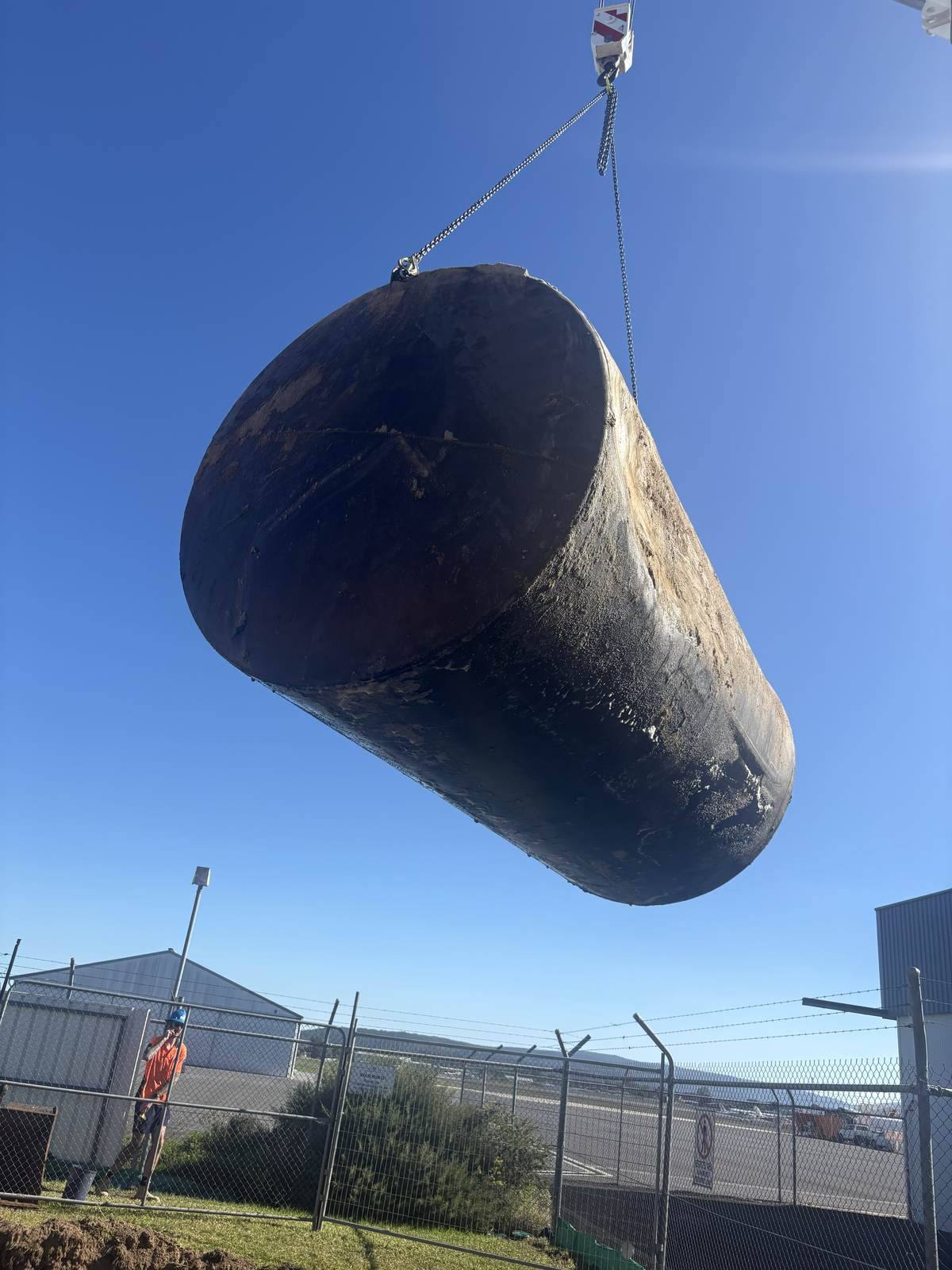
When is a PSI required?
A Preliminary Site Investigation is typically triggered when land use is changing, when a property is being bought or sold, or when a regulator or council asks for reassurance that contamination will not compromise a proposed development. Common situations include:
- Development Applications — where a council must consider whether land is contaminated before approving a development, particularly a change to a more sensitive use such as residential, childcare or open space;
- Property transactions and due diligence — where a purchaser, vendor or lender wants to understand contamination liability before settlement;
- Planning and rezoning — where a site with an industrial, commercial or agricultural history is proposed for redevelopment;
- Subdivision of former farmland, service stations, depots or industrial land;
- Regulatory prompts — where an environmental duty, licence condition or audit consideration points to a need to check the site's status.
In New South Wales, the trigger most people encounter is the State Environmental Planning Policy (Resilience and Hazards) 2021 — the successor to the well-known SEPP 55 — which requires consent authorities to consider whether land is contaminated and, if so, whether it can be made suitable for the proposed use. Across the border, Victoria's Environment Protection Act 2017 introduced a broad General Environmental Duty that similarly encourages landholders to understand and manage contamination risk. In both states, a PSI is the sensible, cost-effective first step. Councils from Albury and Greater Hume through to Wodonga, Wangaratta, Benalla and Moira routinely accept a PSI as the document that addresses the contamination question at the planning stage.
Commission the PSI early — ideally before you finalise your development design or exchange contracts. If the site turns out to need further investigation, knowing that at the outset protects your budget, your timeline and your negotiating position.
What a PSI involves
A robust Preliminary Site Investigation weaves together several strands of evidence into a single, defensible picture of the site. The core components are:
- Desktop study. We review readily available records — geological and soil mapping, hydrogeology, groundwater bore data and previous environmental reports — to understand the physical setting.
- Site history. We reconstruct how the land has been used over time, drawing on aerial photograph sequences, historical title and land-use records, council records and business directories to identify potentially contaminating activities.
- Regulatory searches. We search the relevant EPA and council registers — including records of licensed activities, notified sites, underground storage tanks and any history of dangerous goods or waste — on both sides of the border.
- Site walkover. An environmental scientist inspects the site and its surrounds, looking for staining, odours, stressed vegetation, fill, buried infrastructure, tanks, drums and other visible evidence of contamination.
- Areas of Environmental Concern and Contaminants of Potential Concern. From the evidence we identify specific AECs (locations where contamination may exist) and the associated COPCs (the substances likely to be present).
- Preliminary Conceptual Site Model. We draw the findings together into a preliminary CSM linking potential contamination sources, migration pathways and sensitive receptors such as future residents, workers and groundwater.
Because the PSI is non-intrusive, it can usually be completed quickly and without disturbing the site — an important advantage during a sale, a lease or an early planning phase.
What happens after a PSI
The value of a Preliminary Site Investigation lies in the decision it enables. Its conclusion falls broadly into one of two outcomes:
- Clearance. Where the history and walkover reveal no meaningful potential for contamination — no contaminating land uses, no areas of environmental concern and no physical evidence — the PSI can conclude that the site is suitable for the proposed use and that no further investigation is warranted. For many low-risk sites, this is the end of the assessment process.
- Recommendation for a Detailed Site Investigation. Where the PSI identifies credible potential for contamination, it recommends a Detailed Site Investigation (DSI) to confirm, through soil, groundwater and/or soil vapour sampling, whether contamination is actually present and, if so, its nature and extent.
Importantly, a PSI does not commit you to a DSI in every case — it prevents unnecessary sampling on clean sites and focuses intrusive work only where it is genuinely needed. Where a DSI is recommended, the AECs, COPCs and preliminary CSM developed in the PSI directly shape the sampling design, so no effort is wasted. The PSI and DSI together form the standard two-stage pathway that underpins our broader contamination assessment service.
NSW and Victorian context
Being based on the border, we prepare Preliminary Site Investigations that satisfy the requirements on both sides of the Murray.
In New South Wales, contaminated land is addressed at the planning stage through the State Environmental Planning Policy (Resilience and Hazards) 2021, while significantly contaminated land is regulated by the Contaminated Land Management Act 1997 and the NSW EPA. A PSI prepared for a NSW site is written with SEPP (Resilience and Hazards) and the relevant council's requirements front of mind, so it addresses the questions a consent authority must ask.
In Victoria, the Environment Protection Act 2017 and its General Environmental Duty place the onus on those in management or control of land to understand and minimise risks of harm to human health and the environment. EPA Victoria oversees contaminated land and the environmental audit system, and a PSI is often the first step in deciding whether an audit or further assessment is required. Our reports reference the ASC NEPM and AS 4482 throughout, giving councils and auditors in both jurisdictions a familiar, standards-based framework. We regularly work across Wodonga, Wangaratta, Benalla, Yarrawonga, Shepparton and the wider North East Victoria region, as well as Corowa, Mulwala, Howlong, Holbrook and Thurgoona in southern NSW.
Our methodology
Every Jones Environmental PSI follows a structured, transparent process designed to give councils and clients confidence in the conclusion:
- Scoping. We confirm the site, the proposed development or transaction and the relevant regulatory driver, so the PSI answers the right question.
- Desktop review. We assemble mapping, hydrogeology, previous reports and the physical setting of the site.
- Site history reconstruction. We analyse aerial photograph sequences, title and land-use records and directories to build a timeline of activities on and around the site.
- Regulatory searches. We interrogate the relevant NSW and Victorian EPA and council registers.
- Site walkover. An environmental scientist inspects the site for physical evidence of contamination and confirms current conditions.
- Preliminary Conceptual Site Model. We identify AECs and COPCs and set out sources, pathways and receptors.
- Reporting and conclusion. You receive a clear PSI report that either clears the site or sets out a targeted scope for a Detailed Site Investigation.
Why choose Jones Environmental Consulting
Jones Environmental Consulting is an owner-operated environmental consultancy based in Albury Wodonga, on the NSW–Victoria border. Contaminated land assessment is core business for us, and every Preliminary Site Investigation is carried out by a qualified environmental scientist who understands what a council or auditor needs to see.
Patricia Jones, our Principal Environmental Scientist and Director, brings around two decades of environmental consulting experience across the region, spanning contaminated land, groundwater, waste and land capability work for local government, state agencies, developers and landholders. Russell Jones, Senior Environmental Scientist and Field Operations Manager, has around fifteen years of field experience and runs our in-house environmental drilling and sampling capability — so if a PSI leads to a DSI, the same team can move seamlessly into the intrusive stage.
Clients choose us because we offer:
- Genuine regional expertise — practical knowledge of local land use history, soils, geology and the expectations of councils from Albury and Greater Hume through to Wodonga, Wangaratta, Benalla, Moira and Greater Shepparton;
- Direct senior involvement — you deal with the scientist doing the work, from first call to final report;
- A single team for the whole pathway — PSI, DSI, remediation planning and validation under one roof, with in-house field capability;
- Standards-based, defensible reporting — clear reports grounded in the ASC NEPM and AS 4482, written to be relied upon;
- Regulatory fluency on both sides of the border — one team, two states, no gaps.
A PSI is a modest investment that can save a great deal — protecting you from buying a liability, redesigning a development, or being caught out at the planning stage. Getting the first step right sets the whole project up for success.