In short: A Detailed Site Investigation (DSI) is the intrusive Phase 2 stage of contaminated land assessment. It collects soil, groundwater and soil vapour samples, analyses them at a NATA-accredited laboratory, compares the results to national screening levels, and delineates the extent of any contamination — turning the "maybe" of a Preliminary Site Investigation into hard data.
What is a Detailed Site Investigation?
A Detailed Site Investigation — usually shortened to DSI, and also known as a Phase 2 assessment — is the intrusive stage of contaminated land assessment. Where a Preliminary Site Investigation (PSI) uses history and observation to decide whether contamination is likely, a DSI goes into the ground to establish whether contamination is actually present, what it is, and how far it extends.
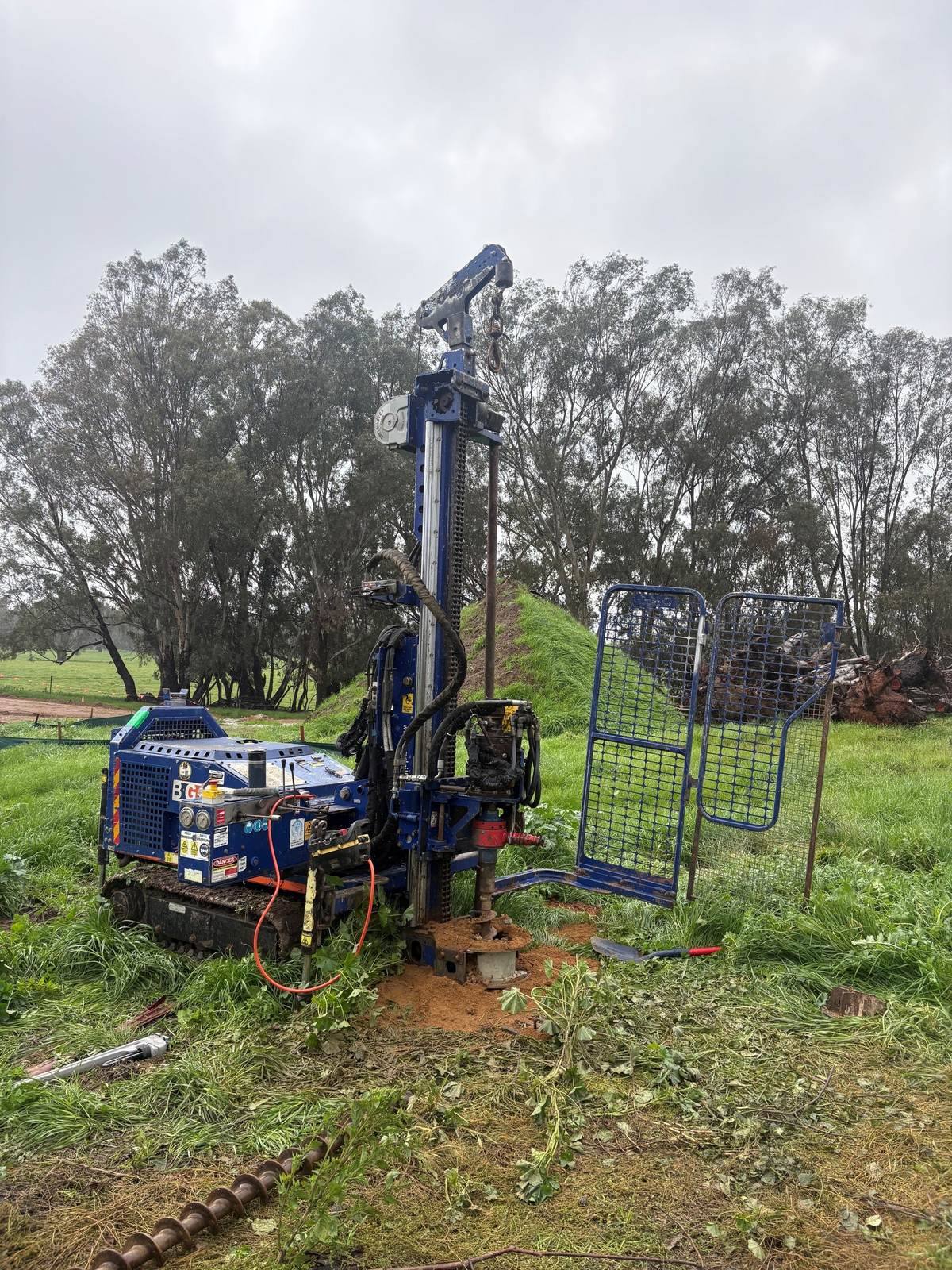
It does this through soil and groundwater sampling — and, where volatile substances are a concern, soil vapour sampling — collected from boreholes, test pits and monitoring wells, then analysed at a NATA-accredited laboratory. The laboratory results are compared against the health and ecological criteria in the National Environment Protection (Assessment of Site Contamination) Measure 1999, as amended in 2013 (the ASC NEPM), and the investigation is designed and reported in accordance with Australian Standard AS 4482 for the investigation of potentially contaminated soil.
The output is far more than a set of numbers. A DSI refines the Conceptual Site Model (CSM) first sketched in the PSI, delineates the extent of contamination, assesses the risk to human health and the environment, and sets out clear recommendations — whether that is no further action, ongoing management, or remediation and validation. It is the technical foundation on which councils, auditors, purchasers and regulators make decisions about a site.
When is a DSI required?
A Detailed Site Investigation is most commonly triggered by the findings of a Preliminary Site Investigation, but it can be required in a number of ways:
- After a PSI flags potential contamination — where the preliminary study identifies areas of environmental concern, contaminants of potential concern or a contaminating land-use history that must now be confirmed by sampling;
- At the direction of a council or the EPA — where a consent authority or regulator requires sampling data to be satisfied that land is, or can be made, suitable for its proposed use;
- To satisfy an environmental auditor — where a statutory audit requires characterisation of soil and groundwater;
- For due diligence — where a purchaser, vendor or financier needs quantified data to understand contamination and liability before a transaction;
- Before redevelopment or excavation — where soil is to be disturbed, exported or reused and its condition must be known.
Because a DSI builds directly on the areas of environmental concern and preliminary CSM developed at the PSI stage, the two studies form a logical, staged pathway. Commissioning both from the same consultant keeps the investigation efficient and avoids duplicated effort.
Where a project timeline is tight, tell us early if groundwater may be involved. Installing and developing monitoring wells, then allowing water levels to stabilise before gauging and sampling, adds time that is best planned for from the outset.
The DSI process
A defensible Detailed Site Investigation is only as good as its design. Our process follows the sequence set out in the ASC NEPM and AS 4482:
- Sampling design (SAQP). We prepare a Sampling, Analysis and Quality Plan that sets the sampling pattern, depths, target analytes and data quality objectives — driven by the AECs and COPCs identified in the PSI.
- Soil sampling. Using boreholes and test pits, we log the soil profile and collect samples at the depths and locations where contamination is most likely, including targeted and validation samples.
- Groundwater sampling. Where groundwater may be affected, we install monitoring wells, develop and gauge them, and collect groundwater samples using low-flow or appropriate purge techniques.
- Soil vapour sampling. Where volatile contaminants such as hydrocarbons or chlorinated solvents are a concern, we assess the vapour pathway to buildings and future occupants.
- NATA laboratory analysis. Samples are submitted under chain-of-custody to a NATA-accredited laboratory for analysis of the relevant contaminant suite, with field and laboratory quality control.
- Data validation. We check the analytical data against the data quality objectives before interpretation.
Our in-house drilling and sampling capability is a real advantage at this stage: it means faster mobilisation, tighter control of sample quality and timing, and the flexibility to add locations in the field if conditions warrant.
Assessing the results
Once laboratory data is in hand, the DSI interprets it against the relevant assessment criteria. The ASC NEPM provides several tiers of screening and investigation levels, each protecting a different receptor:
- Health Investigation Levels (HILs) — soil criteria protecting human health, set by land use (for example, residential, recreational or commercial/industrial);
- Health Screening Levels (HSLs) — criteria for volatile petroleum hydrocarbons in soil and groundwater, addressing the vapour intrusion pathway;
- Ecological Investigation Levels (EILs) — soil criteria protecting terrestrial ecosystems;
- Ecological Screening Levels (ESLs) — criteria for petroleum hydrocarbons protecting ecological receptors.
Results are compared to the criteria appropriate to the current and proposed land use. Where concentrations exceed the relevant level, the DSI examines the source–pathway–receptor linkages in the refined Conceptual Site Model and assesses the actual risk — because an exceedance is not automatically an unacceptable risk. The assessment considers exposure pathways, groundwater beneficial uses and the sensitivity of nearby receptors to reach a defensible conclusion about the significance of any contamination found.
Delineation and what comes next
Where contamination is confirmed, the DSI delineates its horizontal and vertical extent — sampling in a pattern that steps out from affected areas until concentrations fall below the relevant criteria. Reliable delineation is what allows remediation volumes to be estimated, excavated soil to be managed, and risk to be quantified rather than assumed.
Depending on the findings, a DSI concludes with one of several pathways forward:
- No further action — where the site is suitable for its intended use;
- A Remediation Action Plan (RAP) — where contamination must be treated, removed or contained before development can proceed;
- Remediation and validation — implementing the RAP and then confirming, through validation sampling, that the site meets the required standard;
- Ongoing management — through an Environmental Management Plan or, where groundwater is affected, a program of groundwater monitoring;
- Waste classification of any soil to be excavated and disposed of off site.
These next steps sit within our broader contamination assessment service, so the same team can carry a project from investigation through to closure.
NSW and Victorian context
We prepare Detailed Site Investigations that meet the requirements on both sides of the Murray.
In New South Wales, contamination is considered at the planning stage under the State Environmental Planning Policy (Resilience and Hazards) 2021, while significantly contaminated land is regulated under the Contaminated Land Management Act 1997 by the NSW EPA. A DSI for a NSW site is reported against the ASC NEPM and written to address the questions a consent authority or the EPA will ask.
In Victoria, the Environment Protection Act 2017 and its General Environmental Duty require those in control of land to understand and manage contamination risk, and EPA Victoria administers the environmental audit system through which many DSIs are ultimately reviewed. Our investigations reference the ASC NEPM, its HILs, HSLs, EILs and ESLs, and AS 4482 throughout, giving councils and auditors in both jurisdictions a familiar, standards-based framework. We work regularly across Wodonga, Wangaratta, Benalla, Yarrawonga, Shepparton and the wider North East Victoria region, and across Corowa, Mulwala, Howlong, Holbrook and Thurgoona in southern NSW.
Our field capability and methodology
The credibility of a DSI rests on the quality of the fieldwork behind it. Our methodology is built for defensible, repeatable results:
- Review and scope. We build on the PSI findings and confirm the assessment criteria, land use and regulatory driver.
- Sampling, Analysis and Quality Plan. We document the sampling design, analytical suite and data quality objectives before mobilising.
- Intrusive fieldwork. Using our own drilling and sampling equipment, we advance boreholes and test pits, install monitoring wells and collect soil, groundwater and vapour samples under strict chain-of-custody.
- Laboratory analysis. Samples are analysed at a NATA-accredited laboratory with field and laboratory quality control.
- Interpretation and risk assessment. We compare results to the relevant NEPM criteria, refine the CSM and assess risk.
- Delineation and reporting. We delineate contamination and deliver a clear DSI report with conclusions and a recommended way forward.
Having our own field capability means the scientists interpreting the data have also seen the ground it came from — a level of continuity that consultancies relying on external drillers cannot always match.
Why choose Jones Environmental Consulting
Jones Environmental Consulting is an owner-operated environmental consultancy based in Albury Wodonga, on the NSW–Victoria border. Contaminated land assessment is core business for us, and every Detailed Site Investigation is led by a qualified environmental scientist.
Patricia Jones, our Principal Environmental Scientist and Director, brings around two decades of environmental consulting experience across the region, spanning contaminated land, groundwater, waste and land capability work for local government, state agencies, developers and landholders. Russell Jones, Senior Environmental Scientist and Field Operations Manager, has around fifteen years of field experience and runs our in-house environmental drilling and sampling capability — the engine room of a good DSI.
Clients choose us because we offer:
- In-house field capability — our own drilling and sampling equipment means faster mobilisation, better sample quality and tighter control of timing;
- Direct senior involvement — you deal with the scientist doing the work, from sampling design to final report;
- A single team for the whole pathway — PSI, DSI, remediation planning, validation and monitoring under one roof;
- Standards-based, defensible reporting — investigations grounded in the ASC NEPM and AS 4482, written to withstand scrutiny by councils and auditors;
- Regulatory fluency on both sides of the border — genuine knowledge of NSW and Victorian frameworks, and the councils from Albury and Greater Hume through to Wodonga, Wangaratta, Benalla, Moira and Greater Shepparton.
A DSI is where uncertainty becomes evidence. Done well, it gives you the data and the confidence to move a development, a transaction or a remediation forward.