In short: A contamination assessment establishes whether land is affected by harmful substances and what that means for developing, buying or using it. It usually runs in stages — a preliminary investigation, then, if needed, detailed sampling — and can extend to remediation, validation and ongoing management. It is the evidence councils, regulators and purchasers rely on to be confident a site is safe for its intended use.
What is a contamination (contaminated land) assessment?
A contamination assessment — often called a contaminated land assessment — is the structured process of finding out whether a parcel of land is affected by harmful substances, understanding the risk those substances pose, and determining what must be done for the land to be used safely. Contamination can arise from decades of ordinary activity: fuel and chemical storage, industrial processes, waste disposal, agricultural chemical use, filling with unknown material, or spills and leaks that were never recorded.
Rather than a single test, a contamination assessment is a staged, risk-based investigation. It begins with a Preliminary Site Investigation (PSI) that reconstructs the site's history and identifies whether contamination is plausible. Where the PSI flags a credible risk, a Detailed Site Investigation (DSI) follows, sampling soil, groundwater and, where relevant, soil vapour to confirm and delineate contamination. Depending on the findings, the process may continue into remediation, validation and ongoing management.
Throughout, the work is guided by the National Environment Protection (Assessment of Site Contamination) Measure 1999, as amended in 2013 (the ASC NEPM), and Australian Standard AS 4482 for the investigation of potentially contaminated soil. As an environmental consultant based in Albury Wodonga, we deliver the whole pathway — so a project can move from first enquiry to site closure without changing hands.
Why contamination assessment matters for development and planning
Contamination is not just an environmental issue — it is a planning, financial and legal one. A council cannot approve a development unless it is satisfied the land is suitable for the proposed use, and a purchaser or lender takes on the liability attached to contaminated land whether or not they knew about it. A sound contamination assessment protects against unwelcome surprises on all three fronts.
The stakes rise sharply when land changes to a more sensitive use — for example, when former industrial or agricultural land is redeveloped for housing, childcare or public open space. Left unassessed, contamination can stall a Development Application, derail a settlement, inflate construction costs when unexpected material is uncovered, or expose people to genuine health risk. Assessed properly and early, it becomes a known, manageable factor that can be designed around and, where necessary, remediated. That is why councils across the region — from Albury and Greater Hume in southern NSW to Wodonga, Wangaratta, Benalla and Moira in north east Victoria — expect contamination to be addressed as part of the development process.
Assess contamination before you commit — ideally during due diligence or early design. Discovering an issue after you have exchanged contracts or lodged a DA is far more costly than knowing about it up front and negotiating or designing accordingly.
Preliminary Site Investigation (PSI)
The Preliminary Site Investigation is the first stage and, for many sites, the only stage needed. It is a largely non-intrusive study — a desktop review, a reconstruction of the site's history from aerial photographs and land-use records, searches of EPA and council registers, and a site walkover. From this evidence it identifies Areas of Environmental Concern (AEC) and Contaminants of Potential Concern (COPC) and builds a preliminary Conceptual Site Model.
A PSI concludes in one of two ways: it either clears the site as suitable for its proposed use, or it recommends a Detailed Site Investigation to confirm whether contamination is actually present. Because it avoids unnecessary sampling on low-risk land, the PSI is a cost-effective and often decisive first step. Learn more on our dedicated Preliminary Site Investigation page.
Detailed Site Investigation (DSI)
Where a PSI identifies a credible risk, the Detailed Site Investigation puts it to the test. This is the intrusive stage: soil, groundwater and, where volatile substances are a concern, soil vapour are sampled from boreholes, test pits and monitoring wells, then analysed at a NATA-accredited laboratory.
The results are compared against the ASC NEPM's Health Investigation Levels (HILs), Health Screening Levels (HSLs), Ecological Investigation Levels (EILs) and Ecological Screening Levels (ESLs) for the relevant land use. The DSI refines the Conceptual Site Model, assesses risk, and delineates the extent of any contamination — providing the hard data needed to decide whether a site can be developed as-is, requires remediation, or needs ongoing management. Our in-house drilling capability makes this stage faster and better controlled; see the full detail on our Detailed Site Investigation page.
Remediation, validation and management
When a Detailed Site Investigation confirms unacceptable contamination, the assessment moves into the management phase. Depending on the site, this can involve:
- Remediation Action Plan (RAP) — a documented strategy for treating, removing or containing contamination so the site becomes suitable for its intended use;
- Remediation and validation — implementing the plan and then confirming, through validation sampling, that the required standard has been achieved;
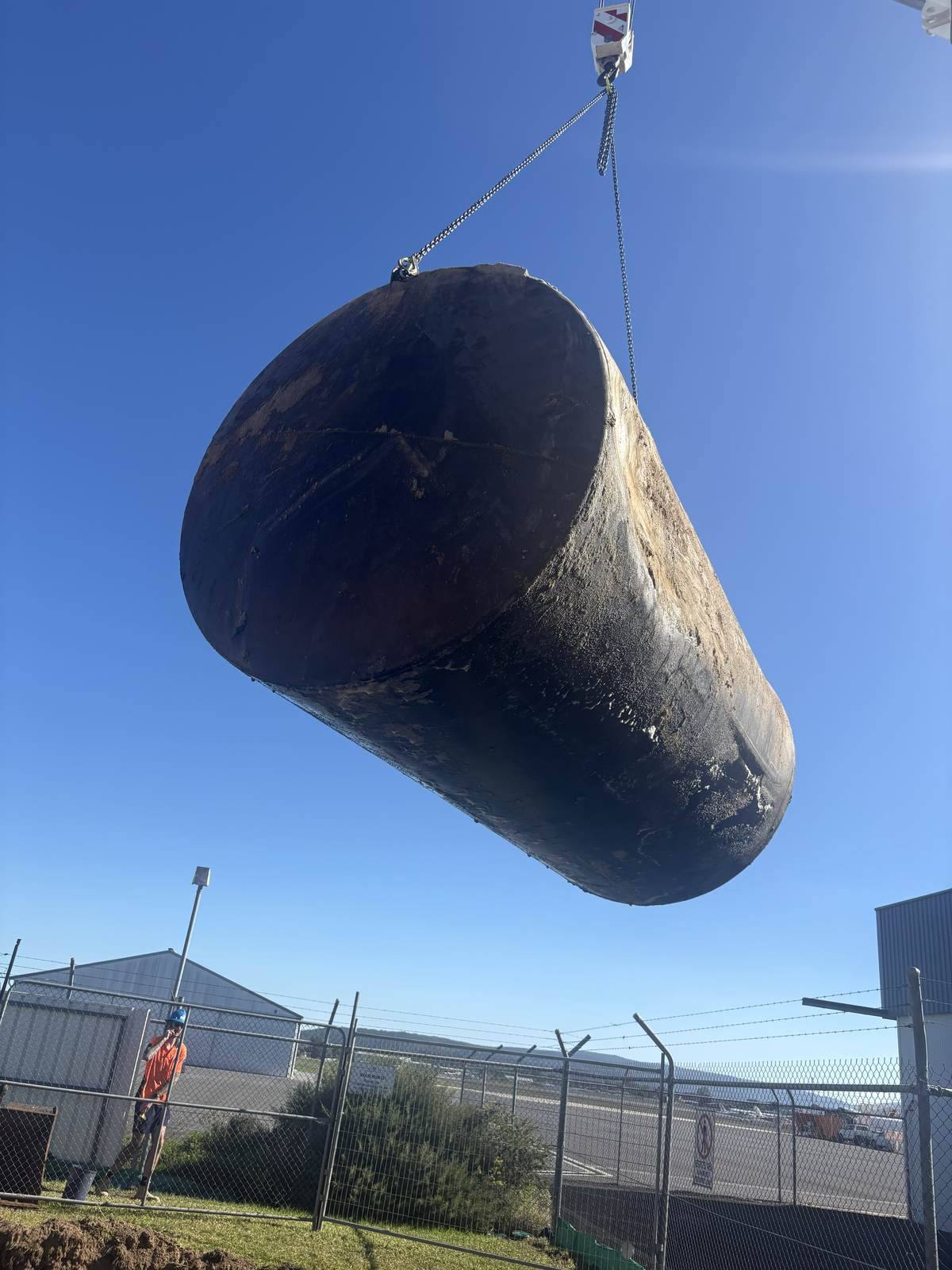
- UPSS assessment — investigation and management associated with underground petroleum storage systems, a common source of hydrocarbon contamination at former service stations and depots;
- PFAS assessment — investigation of per- and poly-fluoroalkyl substances, an emerging class of contaminants requiring specialised handling;
- Environmental Management Plan (EMP) — controls for managing residual contamination during construction and into the future;
- Waste classification and groundwater monitoring — classifying excavated soil for lawful disposal and, where groundwater is affected, monitoring it over time.
Because we handle the whole pathway, contamination found during investigation flows straight into a practical management response — including waste classification of excavated soil and, where required, ongoing groundwater monitoring — without losing continuity or corporate knowledge of the site.
NSW and Victorian regulatory framework
Contamination assessment in Australia is anchored nationally by the ASC NEPM, which provides the assessment framework and the health and ecological criteria used across the country, supported by AS 4482 for soil investigation. On top of that national foundation, each state adds its own regulatory layer.
In New South Wales, contamination is considered at the planning stage under the State Environmental Planning Policy (Resilience and Hazards) 2021 — the successor to SEPP 55 — which requires consent authorities to consider whether land is contaminated and can be made suitable for a proposed use. Significantly contaminated land is regulated separately by the NSW EPA under the Contaminated Land Management Act 1997.
In Victoria, the Environment Protection Act 2017 introduced the General Environmental Duty, placing a proactive obligation on those in management or control of land to understand and minimise risks of harm. EPA Victoria administers contaminated land and the environmental audit system through which more complex sites are reviewed. Being on the border, we prepare assessments that satisfy both frameworks, and we regularly work across Wodonga, Wangaratta, Benalla, Yarrawonga and Shepparton in Victoria, and Corowa, Mulwala, Howlong, Holbrook and Thurgoona in southern NSW.
Our experience across government and commercial projects
Jones Environmental Consulting is an owner-operated environmental consultancy based in Albury Wodonga. Over the years we have delivered contaminated land assessments for a broad mix of clients — local government, state agencies, developers, businesses and private landholders — across a wide range of settings, from former service stations and industrial yards to farmland, commercial redevelopments and residential subdivisions on both sides of the border.
That breadth matters. A contamination assessment is only as useful as the judgement behind it: knowing which site histories genuinely warrant sampling, where contamination tends to hide in the region's soils and geology, and what a particular council or the EPA needs to see to be satisfied. We bring that regional, cross-sector judgement to every project, scoping the work to the real risk so clients are neither under-investigated nor paying for sampling that is not warranted.
Why choose Jones Environmental Consulting
Contaminated land assessment is core business for us, and every project is led by a qualified environmental scientist — not delegated to a junior and signed off from a distance.
Patricia Jones, our Principal Environmental Scientist and Director, brings around two decades of environmental consulting experience across the region, spanning contaminated land, groundwater, waste and land capability work for local government, state agencies, developers and landholders. Russell Jones, Senior Environmental Scientist and Field Operations Manager, has around fifteen years of field experience and runs our in-house environmental drilling and sampling capability — so the same team that scopes an assessment can also carry out the fieldwork.
Clients choose us because we offer:
- The full pathway under one roof — PSI, DSI, remediation planning, validation, waste classification and groundwater monitoring, with no loss of continuity between stages;
- In-house field capability — our own drilling and sampling equipment means faster mobilisation and tighter control of quality and timing;
- Direct senior involvement — you deal with the scientist doing the work, from first call to final report;
- Risk-based scoping — assessment matched to the actual risk, so you are neither over- nor under-investigated;
- Regulatory fluency on both sides of the border — genuine knowledge of the ASC NEPM and the NSW and Victorian frameworks, and of councils from Albury and Greater Hume through to Wodonga, Wangaratta, Benalla, Moira and Greater Shepparton.
Contamination is manageable when it is understood. Our job is to give you a clear, defensible picture of your site and a practical path forward — so your development, transaction or project keeps moving.