In short: A Land Capability Assessment (LCA) is a site-specific report that determines whether a block of land can safely and sustainably treat and disperse household wastewater on site. It is the technical document your council relies on to approve a septic or on-site wastewater system where there is no sewer connection. Our main Land Capability Assessment service page explains how we prepare one.
What an LCA is
A Land Capability Assessment — almost always shortened to LCA — is a site-specific technical report that evaluates whether a parcel of land can treat and disperse on-site wastewater (sewage effluent) without harming public health, surface water, groundwater or neighbouring properties. It is the assessment councils rely on before approving an on-site wastewater management system on land that is not connected to a reticulated sewer.
The idea behind it is straightforward. When a home is not on sewer, everything that goes down the drains — from toilets, showers, the kitchen and the laundry — has to be treated and returned to the environment on the same property. An LCA asks whether the land can actually do that job: can the soil absorb and renovate the volume of effluent a household will generate, every day, for decades, in every season? The assessment is prepared to the Australian and New Zealand Standard AS/NZS 1547:2012 On-site domestic wastewater management, together with the relevant NSW or Victorian guidance.
An LCA is not a box-ticking form. It brings together soil science, hydrology, site survey and regulatory knowledge, and it ends in a clear engineering recommendation: the type of wastewater system suited to the site, the size and location of the land application area (where treated effluent is dispersed), and any conditions the landholder must observe. For a fuller treatment of the whole process, see our detailed Land Capability Assessment service page.
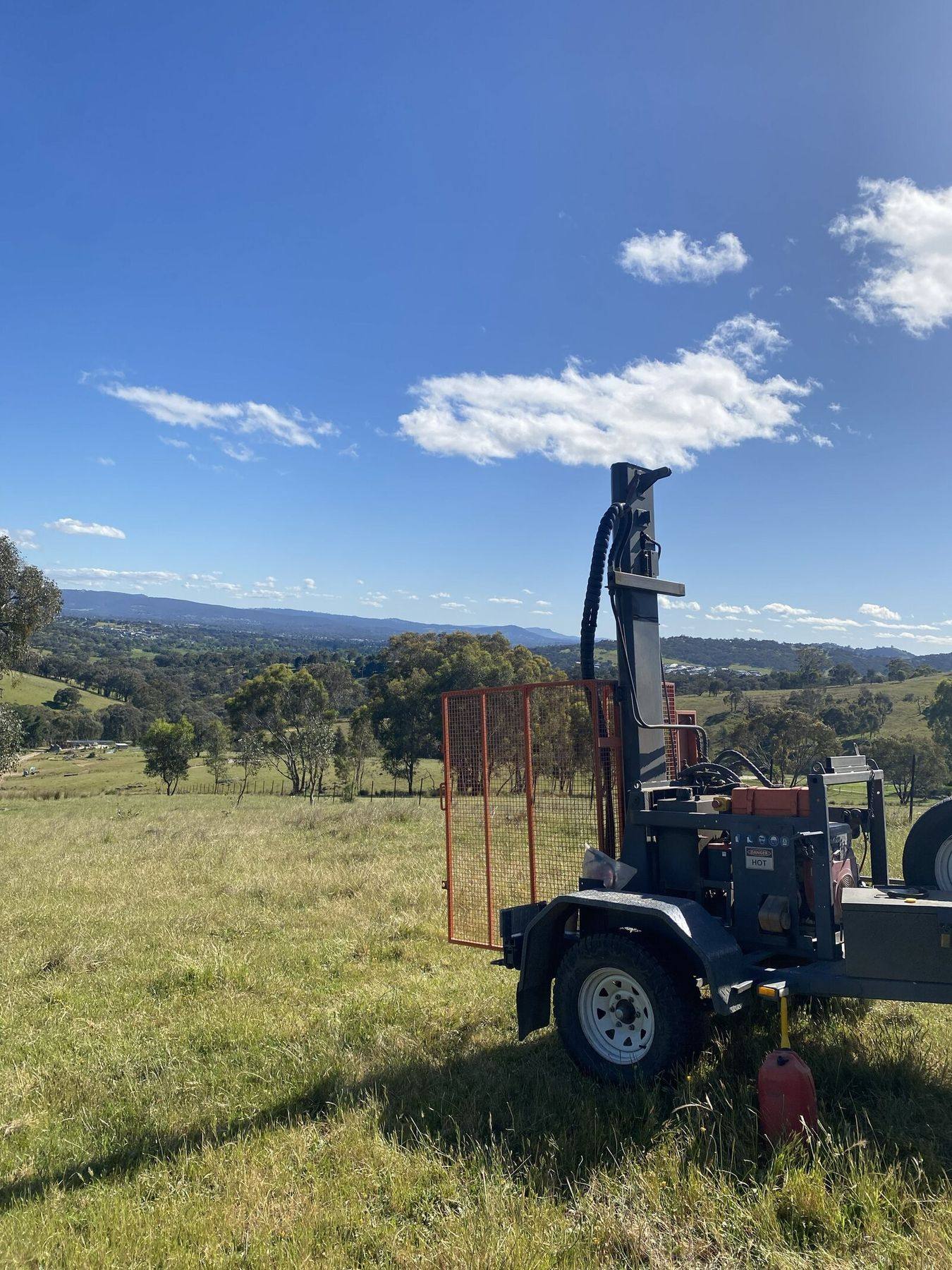
What an LCA report contains
A well-prepared LCA reads as a self-contained story about your land. While the exact structure varies with the council and the project, most reports include:
- Site and development description — the lot, the proposed dwelling or subdivision, and the design wastewater load (usually driven by the number of bedrooms);
- Desktop review — mapped soils and geology, flood and catchment mapping, rainfall data and any relevant council policy;
- Soil investigation results — logs of test pits or boreholes, soil texture and structure, the soil category under AS/NZS 1547, permeability, and dispersion testing;
- Site assessment — slope, drainage, flooding, vegetation, existing infrastructure and buffer distances;
- Groundwater considerations — evidence of the seasonal high watertable and the sensitivity of the underlying groundwater;
- Water and nutrient balance — the modelling that sizes the land application area for the design load and local climate;
- Recommendations — the recommended treatment system, dispersal method, land application area (plus a reserve area), and management conditions;
- Plans — a site plan showing the proposed system and land application area in context.
The combination of soil data, site analysis and balance modelling is what separates a genuine LCA from a simpler report. It is the reason an environmental health officer can look at the document and approve a system with confidence.
Why councils require an LCA
Councils require an LCA because poorly sited on-site wastewater systems cause real problems: effluent surfacing in yards, contamination of dams and creeks, nutrient loading of waterways, and risks to bores and drinking water. On unsewered land, the council is the authority responsible for making sure a proposed system will work — and an LCA gives them the technical basis to make that decision.
In New South Wales, on-site wastewater is regulated under the Local Government Act 1993 and the Local Government (General) Regulation 2021. Installing and operating a system requires council approval — commonly called a Section 68 approval — supported by the NSW Onsite Wastewater Management Guidelines (2025). In Victoria, the framework is the Environment Protection Act 2017 and the Environment Protection Regulations 2021, together with EPA Victoria's Guideline for onsite wastewater management (2024); systems discharging no more than 5,000 litres per day need a council permit to install, alter or use them. Our jurisdiction guides cover LCA requirements in NSW and LCA requirements in Victoria in detail.
In practice, an LCA is requested as a supporting document with a Development Application, a subdivision application, or an on-site wastewater permit. If your planner, surveyor or builder tells you the block is "unsewered", an LCA is almost certainly on your critical path — and our guide on whether you need an LCA runs through the common triggers.
Commission the LCA early. The land application area it identifies can influence where the house sits, where the driveway runs and how a subdivision is laid out. Designing around the assessment is far cheaper than redesigning after it.
The soil and site factors assessed
Because soil does the work of treating effluent, soil assessment is the heart of an LCA. An environmental scientist excavates test pits or drills boreholes across the proposed land application area and logs the profile by horizon, assessing:
- Soil texture and structure — from sands through loams to heavy clays;
- Soil category (1–6) under AS/NZS 1547, which sets the indicative design loading rate;
- Permeability — how readily water moves through each horizon;
- Dispersion and sodicity — assessed with the Emerson aggregate test, since dispersive soils behave very differently when wet;
- Depth to limiting layers — rock, hardpan, or a seasonally high watertable.
Alongside the soil, the assessment weighs the site as a whole: slope (steep land increases run-off risk), flooding and drainage lines, the area available for a primary land application area plus a reserve, and buffer distances to boundaries, dwellings, waterways, dams and bores. Groundwater sets a hard limit — there must be enough unsaturated soil beneath the disposal area to treat effluent before it reaches the watertable. The regional soils around Albury, Wodonga, Thurgoona and north east Victoria are genuinely varied, from texture-contrast soils on the granitic and sedimentary country to heavier riverine clays on the floodplains near the Murray, Ovens and Goulburn, so a credible LCA reflects what is actually beneath your site rather than a generic assumption.
How an LCA differs from other reports
People often confuse an LCA with a simple soil test or a basic "septic report". The difference is scope. A soil test tells you about the soil at a point. A septic assessment often focuses on selecting and sizing a treatment system. An LCA is broader than both: it assesses the capability of the land itself — soil, slope, groundwater and site constraints together — to sustainably accept effluent, and only then recommends a system and land application area on that basis. Because it starts from the land, an LCA generally satisfies the underlying septic requirement as well. We compare the two directly in LCA vs septic assessment.
An LCA is also distinct from a contamination or planning report. It is specifically about whether wastewater can be managed on site — not about soil contamination, geotechnical stability or bushfire attack levels, all of which are separate assessments a project may also need.
Getting an LCA for your project
If you are building, subdividing or upgrading a wastewater system on unsewered land, the practical steps are simple. Confirm with your designer, surveyor or planner that the block is unsewered and that an LCA is required. Engage a suitably qualified assessor early — ideally before the house siting and lot layout are locked in. Provide the proposed floor plan (or lot layout) and the name of your council, so the assessment can be tailored to the right requirements. From there, the assessor inspects the site, investigates the soils, runs the water and nutrient balance, and delivers a council-ready report.
At Jones Environmental Consulting, every LCA is carried out by a qualified environmental scientist. Patricia Jones, our Principal Environmental Scientist and Director, brings around two decades of consulting experience across the region, and Russell Jones, our Senior Environmental Scientist and Field Operations Manager, brings some fifteen years of field and soil investigation experience and runs our in-house drilling capability. We prepare LCAs on both sides of the border — from Albury, Howlong, Corowa and Holbrook in southern NSW through to Wodonga, Wangaratta, Benalla, Yarrawonga, Mulwala and Greater Shepparton in north east Victoria.
Ready to move? Read our companion guide, Do I need an LCA?, or head straight to our Land Capability Assessment service page and request a quote.